Health and Safety Policy for Oven Cleaning Croydon
 Health and safety are central to every professional oven cleaning Croydon service. Whether working in domestic kitchens or shared environments, safe working practices protect customers, staff, property, and equipment. This policy sets out the standards expected during oven cleaning activities, with a clear focus on preventing injury, reducing risk, and maintaining a clean and controlled workspace. It applies to all routine oven cleaning services, including degreasing, part removal, internal scrubbing, and finishing checks.
Policy Commitment
We are committed to carrying out every oven cleaning task in a way that minimises hazards and supports safe, efficient work. Kitchen cleaning safety depends on careful preparation, proper use of products, and an understanding of the condition of each appliance. Before any work begins, the area is assessed for risks such as heat, sharp edges, unstable components, slippery floors, electrical sources, and poor ventilation. This approach helps ensure that oven cleaner safety remains a priority from start to finish.
Responsibilities
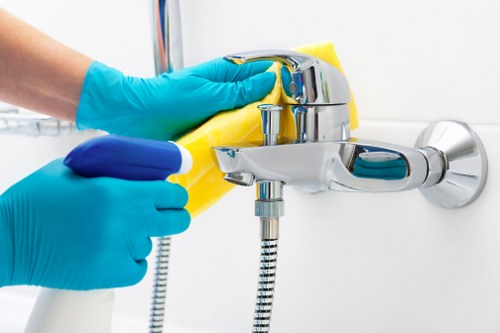 Everyone involved in an oven clean has a duty to follow safe systems of work. Staff must use suitable personal protective equipment, handle tools correctly, and follow instructions for cleaning products and equipment. Managers are responsible for providing training, maintaining safe procedures, and ensuring that products and tools are appropriate for the task. Customers also play a role by clearing surrounding items, keeping pets and children away, and informing the team about faults or unusual appliance behaviour before work begins.
Safe practice begins with preparation. The workspace should be made accessible, and fragile items, soft furnishings, food, and loose objects should be moved away from the cleaning area. Electrical appliances must be checked for signs of damage before use, and ovens should be confirmed as cool unless a controlled process requires otherwise. Where possible, oven degreasing safety is supported by isolating the appliance and ensuring that cleaning fluids are used only according to product guidance.
Cleaning agents are selected for their suitability, effectiveness, and safety profile. Products must be stored, mixed, and applied in line with manufacturer instructions. Strong chemicals, aerosols, and alkaline solutions can create risks if misused, so correct dilution and ventilation are essential. Staff should wear gloves, eye protection, and other protective clothing where necessary. In any professional oven cleaning setting, avoiding cross-contamination is also important, especially when handling removable parts and food-contact surfaces.
 Equipment used in oven cleaning services must be kept in good condition. Scrapers, brushes, pads, and cloths should be suitable for the surface being cleaned to avoid damage or injury. Tools should be inspected regularly, and damaged items must not be used. Safe lifting techniques should be applied when removing heavy racks, trays, or panels. If a component is awkward, hot, or secured in a way that creates risk, the task should be paused and reviewed before continuing.
Risk Control Measures
The main hazards in domestic oven cleaning include chemical exposure, burns, cuts, slips, and electrical contact. To control these risks, work should be carried out in a calm, orderly manner with clear access and good lighting. Floors should be kept dry to reduce slipping hazards, and any spillages must be cleaned immediately. Staff should not rush tasks, as hurried cleaning increases the likelihood of accidents. Clear communication is essential when more than one person is involved in the same space.
Ventilation plays a major role in maintaining a safe environment. Kitchens should have windows opened or extractor systems activated where appropriate to reduce fumes and support air quality. Appliance cleaning safety also depends on recognising when a surface is too hot, a seal is damaged, or a control panel appears compromised. In such cases, work must be stopped and the issue reported. No task should continue if it might damage the appliance or put anyone at risk.
Safe waste handling is part of the policy. Used cloths, residue, disposable materials, and contaminated items should be collected and disposed of in a hygienic manner. Where reusable tools are involved, they must be cleaned and stored properly after use. Attention to waste control supports a tidy workspace and lowers the chance of accidental contact with chemicals or grease. For this reason, oven maintenance cleaning must always include a final area inspection before the job is considered complete.
Training, Reporting, and Review
 Staff receive instruction on hazard awareness, safe chemical use, PPE, manual handling, and emergency response. Training is refreshed regularly so that safe methods remain consistent and up to date. Any incident, near miss, or unsafe condition must be reported promptly so that corrective action can be taken. This applies to small issues as well as more serious events, because early reporting helps prevent future harm during oven cleaning work.
In the event of exposure to a cleaning product, accidental injury, or equipment fault, work must stop immediately and the affected person must receive appropriate first aid or assistance. If there is any doubt about an appliance’s safety, it should not be used until it has been checked and confirmed as safe. The same principle applies to surfaces, handles, seals, and electrical controls. A careful response protects both the technician and the household or premises.
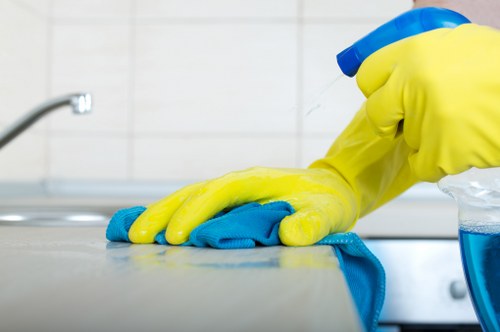 This policy is reviewed periodically to ensure it remains suitable for current working methods, product choices, and safety expectations. Updates may be made following incidents, changes in equipment, or improvements in best practice. The aim is to maintain a reliable framework for safe oven cleaning that supports high standards without compromising health. Every task should be approached with professionalism, caution, and respect for the working environment, ensuring that oven cleaning remains effective, controlled, and safe for everyone involved.